
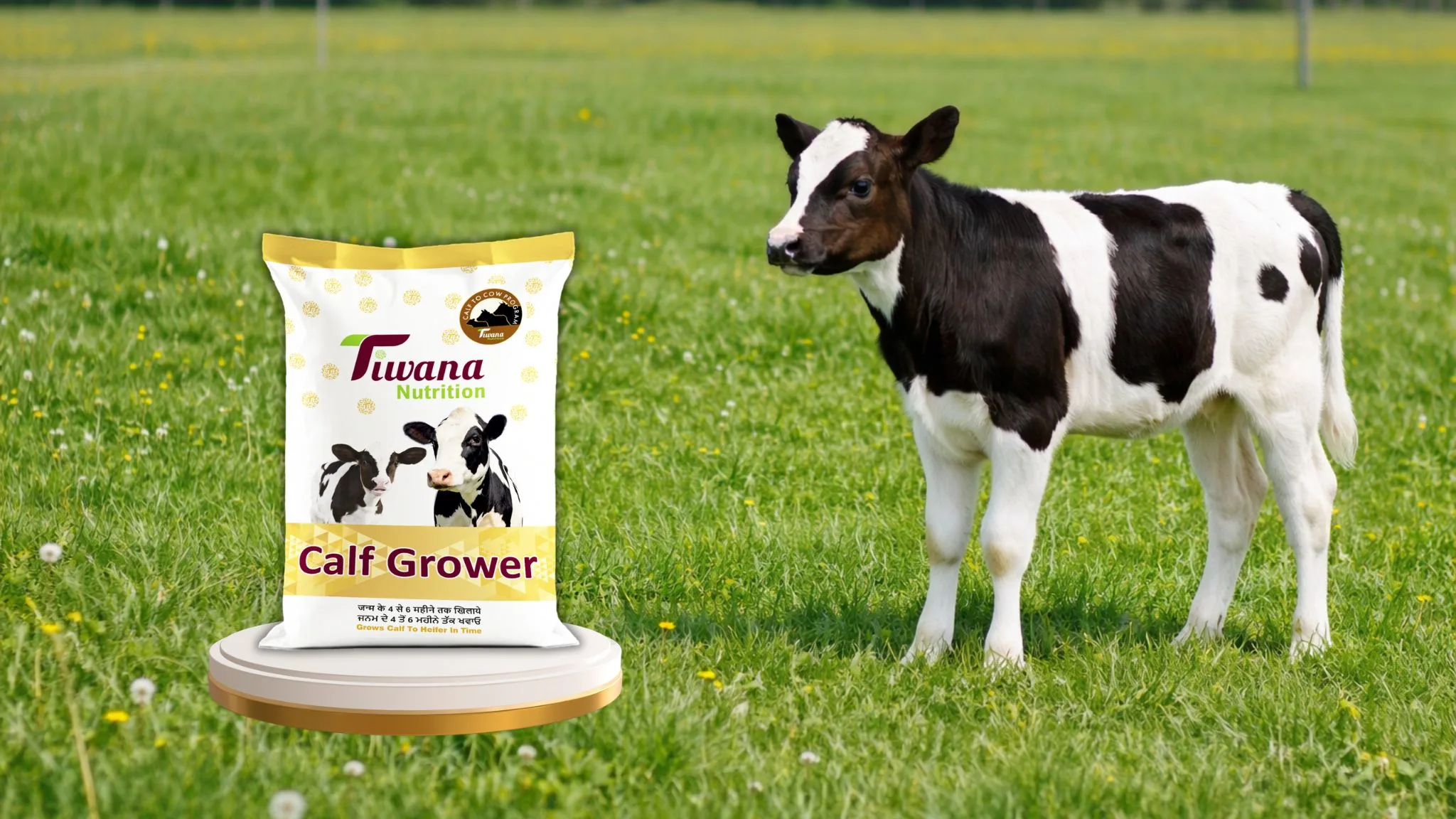
How Calf Grower Feed (3–6 Months) Builds Stronger Future Dairy Animals
The period between three and six months of age is one of the most important stages in a calf’s life. By this time, milk feeding has completely stopped, and the calf is functioning fully as a ruminant. The rumen is active, solid feed intake has increased, and growth begins to move faster than many farmers realize.
This stage is no longer about helping the calf adjust to solid feed. That phase is already complete. Now, the focus shifts to building body frame, strengthening bones, and preparing the animal for its future as a productive heifer and dairy cow.
If growth slows during this period, the effect often stays with the animal for life.
What Happens Between 3 and 6 Months?
From three months onward, calves enter a rapid growth phase. Body height increases, the skeletal system lengthens, muscles develop, and internal organs mature. This is the time when the animal’s physical structure is formed.
A healthy calf during this stage can gain around 600 to 900 grams per day under proper feeding. When nutrition is balanced, growth appears steady and proportional. The calf looks taller and stronger, not fat.
However, if feeding is inconsistent or poorly balanced, frame development slows. Even if feed improves later, lost skeletal growth cannot be fully recovered.
The Real Purpose of Calf Grower Feed
Calf grower feed for 3–6 months is not meant for rumen development. It is meant for structured growth.
At this stage, calves require:
- Steady energy to support daily weight gain
- Good quality protein for muscle and tissue development
- Adeate fibre to maintain rumen health
- Balanced minerals for bone strength
The goal is simple: build the frame first, not fat.
When energy is too high without proper balance, calves may gain weight but develop excess fat instead of height and strength. A well-formulated grower feed avoids this by providing controlled energy and quality protein that supports lean growth.
Why This Stage Influences Future Milk Production
Growth between three and six months directly affects when a heifer reaches breeding weight. If calves grow consistently:
- They reach puberty earlier
- Breeding happens on time
- First calving is not delayed
- Lifetime milk production improves
On many farms, delayed maturity can be traced back to weak nutrition during this growth window.
A strong frame allows the animal to carry pregnancy better, support higher milk yield, and maintain better overall health in adulthood.
Common Mistakes During the Grower Phase
Many feeding programs focus heavily on milk and starter feed, but once calves cross three months, structured planning often becomes less strict. This is where growth losses begin quietly.
Some common issues include:
- Moving calves too quickly to adult ration
- Feeding only roughage without balanced concentrate
- Ignoring mineral supplementation
- Inconsistent feeding timing
These practices may not show immediate visible problems, but they gradually reduce growth speed and frame development.
Practical Feeding Approach for 3–6 Month Calves
A steady routine works best in Indian farm conditions.
During this phase:
- Grower feed should be given daily in measured quantity
- Dry fodder should always be available
- Good quality green fodder can be introduced gradually
- Clean drinking water must be accessible at all times
Feed should not change suddenly. Consistency in timing and quantity helps calves maintain appetite and steady growth.
By six months of age, a well-managed calf should look taller, stronger, and more balanced compared to calves raised without a proper grower phase.
Building the Future Dairy Cow Starts Here
Calf grower feeding between three and six months is not just another feeding step. It is the foundation stage for future productivity. Strong bones, proper height, and balanced muscle development during this time shape how the animal performs throughout its life.
When this phase is managed properly, farms see:
- Better uniformity in heifer groups
- Timely breeding
- Reduced age at first calving
- Improved long-term milk performance
Healthy dairy herds are not built during lactation. They are built during early growth — especially in the 3 to 6 month window.
A structured calf grower program ensures that today’s calves become tomorrow’s high-performing cows.
Practical Feeding Structure for 3–6 Month Calves Under Indian Farm Conditions
Feeding calves between three and six months of age requires more than just good-quality feed. It requires consistency. In Indian dairy conditions, where fodder quality may vary by season, heat stress can reduce intake, and labour routines are not always uniform, a simple and structured feeding plan makes a significant difference.
At this stage, calves are fully weaned and growing rapidly. Their rumen is functional, and their nutritional demand increases steadily. A phased, disciplined approach ensures that growth remains smooth and uninterrupted.
The First Month After Entering the Grower Phase (Around 3–4 Months of Age)
When calves move firmly into the grower stage, feeding should become structured and predictable. Grower feed should be introduced as the primary concentrate source, offered in measured quantities rather than free choice.
During this period:
- Feed at fixed times daily to build appetite rhythm
- Provide dry fodder continuously to maintain rumen function
- Introduce green fodder gradually, depending on availability
- Ensure constant access to clean, cool drinking water
The aim during this month is stability. Sudden changes in feed type or quantity should be avoided, as steady intake supports steady growth.
Mid-Grower Phase (4–5 Months of Age)
As calves approach four to five months, their appetite improves and growth becomes more visible. This is the time to gradually increase grower feed quantity in small steps, matching the calf’s body weight and condition.
Fodder quality becomes especially important here. Good-quality roughage supports rumen efficiency, while the grower feed provides the concentrated nutrients required for skeletal and lean tissue development.
At this stage, calves should appear taller and stronger, not excessively fleshy. Balanced growth is the goal.
Late Grower Phase (5–6 Months of Age)
Between five and six months, calves experience significant frame expansion. Height, chest girth, and overall body capacity increase. Nutrition during this window directly influences how smoothly the animal transitions into the heifer stage.
A daily ration combining:
- Calf grower feed
- Adequate dry fodder
- Seasonal green fodder
- Balanced mineral supplementation
helps maintain uniform development even when fodder quality fluctuates due to seasonal changes.
Consistency during this period prevents growth setbacks and prepares calves for efficient heifer rearing.
Common Challenges in the Grower Phase — and How Proper Feeding Helps
Even after weaning is complete, calves may not immediately settle into a stable feeding pattern. Growth disturbances often begin quietly if management becomes inconsistent.
Some common issues include:
Low feed intake
Changes in environment, heat stress, or irregular feeding times can reduce appetite. A balanced grower feed with steady energy levels helps maintain intake and prevents sudden weight loss.
Digestive irregularities
If concentrate levels are increased too quickly or fibre is insufficient, calves may develop loose dung or mild digestive upset. A properly formulated grower feed with balanced fibre and controlled starch supports rumen stability.
Uneven growth within the group
Without structured feeding, size variation between calves becomes noticeable. Using grower feed as a consistent base ration reduces growth gaps and improves group uniformity.
Lower resistance to stress and infections
Minerals and vitamins play a larger role during this stage than many farmers realize. Adequate micronutrient supply strengthens immunity and helps calves cope better with environmental challenges.
Supporting Balanced Development Through Stage-Focused Nutrition
A well-designed calf grower program is built around the natural growth pattern of calves between three and six months. The focus is not rapid weight gain, but strong structural development.
Balanced nutrition during this phase ensures:
- Steady height increase
- Proper bone strength
- Lean muscle formation
- Smooth transition into the heifer stage
When digestion remains stable and nutrients are supplied consistently, calves grow uniformly and mature on time.
Healthy dairy herds are not built in the milking shed. They are shaped during early growth. A structured calf grower feeding program between three and six months lays the groundwork for stronger heifers, timely breeding, and improved lifetime productivity.
How Tiwana Nutrition’s Calf Grower Feed Supports Balanced Development (3–6 Months)
Between three and six months of age, calves are no longer adjusting to milk withdrawal—they are building their future structure. This is the stage where height increases, bones lengthen, and lean muscle develops rapidly. Tiwana Nutrition designs its calf grower feed around this natural growth pattern, focusing on steady structural development rather than short-term weight spikes.
Instead of pushing for rapid gain, the approach supports digestion first and growth next. When the rumen remains stable and intake stays consistent, nutrients are used more efficiently. The result is balanced development that fits real farm conditions, including seasonal fodder changes and variable management routines.
Stage-Based Nutrient Balance
As calves move from three to six months, their nutrient demand shifts gradually. Tiwana’s grower formulation reflects this progression by providing balanced energy and quality protein that support frame expansion without promoting excess fat deposition. Growth appears steady, with visible improvement in body height, chest width, and overall strength.
Support for Digestive Stability
At this age, calves consume more roughage and larger concentrate portions. Fibre sources and controlled starch levels are selected to maintain rumen balance and encourage regular feed intake. When digestion stays stable, calves show better appetite consistency and fewer growth interruptions.
Protein Designed for Structural Growth
Protein quality plays a central role during this phase. Rather than focusing only on crude protein percentage, attention is given to amino acid availability that supports lean tissue formation and skeletal development. This helps calves grow taller and stronger, not merely heavier.
Consistency That Reduces Growth Gaps
Uniform feeding across the grower phase improves group performance. When calves receive the same dependable base ration daily, size variation within the group decreases. This simplifies management and ensures smoother transition into the heifer stage.
By aligning nutrition with the natural growth rhythm of calves between three and six months, Tiwana Nutrition’s calf grower feed supports stronger frames, steady development, and better preparation for future dairy performance. Balanced early growth is not about speed—it is about building the foundation for long-term productivity.
How Early Calf Growth Shapes Lifetime Milk Potential
Early growth during the 3–6 month stage plays a crucial role in shaping a heifer’s future productivity. During this period, the body frame expands rapidly, bones strengthen, and lean muscle develops. When calves gain weight steadily—around 600–900 grams per day—they reach breeding size on time and transition smoothly into the heifer stage. Proper nutrition in these months not only supports structural development but also prepares the animal for higher milk production later in life.
- Steady grower-phase nutrition supports strong skeletal development.
- Timely weight gain helps achieve earlier breeding readiness.
- Better frame growth reduces delays in first calving.
- Early balanced feeding improves future milk potential and lifetime performance.