Dry Bovine Formula: A Smarter Dry Cow Feed for Modern Dairy Farms
Modern dairy farming in India is no longer just about daily milk collection; it is about long-term animal health and farm sustainability. Many farmers overlook the 60-day window before a cow gives birth, assuming that reduced activity requires less attention. However, this resting phase is actually the most active time for internal recovery and calf development. Selecting the right dry cow feed during this period acts as a foundation for the next lactation cycle, ensuring the animal remains productive and strong.
If the nutritional needs are ignored now, the cow will struggle to reach her peak milk yield after calving. This is why specialized nutrition, like the solutions developed by Tiwana Nutrition, is becoming a standard for professional dairy units. By providing a high-quality dry feed for cow management, you are not just maintaining her weight; you are preparing her rumen and udder tissue for high-performance milk and protein production in the coming months.
Why is the 60-Day Dry Period Non-Negotiable?
Farmers often mistake the dry period for a simple rest phase, but the biological reality is a process of intense internal repair. Shortening this 60-day window typically causes a 20% to 25% loss in milk production during the next cycle. This drop happens because udder tissues need this specific duration to replace old cells with fresh, healthy ones capable of high milk and protein output.
Using a consistent dry cow feed during these two months prevents the animal from entering her next lactation with a depleted system. This preparation is vital for these three reasons:
- Rumen Recovery: The rumen wall works overtime processing heavy grains during the milking season. This phase allows the “rumen papillae”, the finger-like structures responsible for nutrient absorption, to regrow and reset for better efficiency later.
- Fetal Development: A calf gains nearly 60% of its total birth weight in the final two months of pregnancy. Without a specialized dry feed for cow health, the mother is forced to drain her own body reserves to support the calf, which weakens her long-term condition.
- Metabolic Reset: This window lets the cow’s mineral levels stabilize before the stress of calving begins. Proper nutrition at this stage significantly lowers the risk of common post-birth failures like ROP, Dystocia, milk fever and Ketosis.
How Does Nutrition Impact the Next Lactation Cycle?
Feed quality during the dry period directly determines milk quality after calving. Reducing protein at this stage is a common mistake that often results in lower milk fat and protein percentages later on. Proper nutrition during this transition is what actually prepares the animal’s body for the metabolic stress of peak production.
Focusing on high-quality dry feed for cow management improves several performance factors for the following season:
- Higher Protein Content: Sufficient protein intake during the dry phase provides the amino acids needed for nutrient-rich colostrum and high-protein milk.
- Faster Peak Milk Yield: Animals on a balanced dry cow feed reach their maximum production levels much earlier than those on restricted diets.
- Body Condition Scoring (BCS): Proper feeding keeps the cow at a steady weight, not too thin, which limits milk, and not too fat, which makes calving difficult.
- Better Recovery Post-Calving: A well-nourished cow resumes normal eating habits quickly after birth. This closes the “energy gap” that usually leads to rapid weight loss and health issues.
Why Is Tiwana Nutrition’s Dry Bovine the Most Efficient Choice for Your Farm?
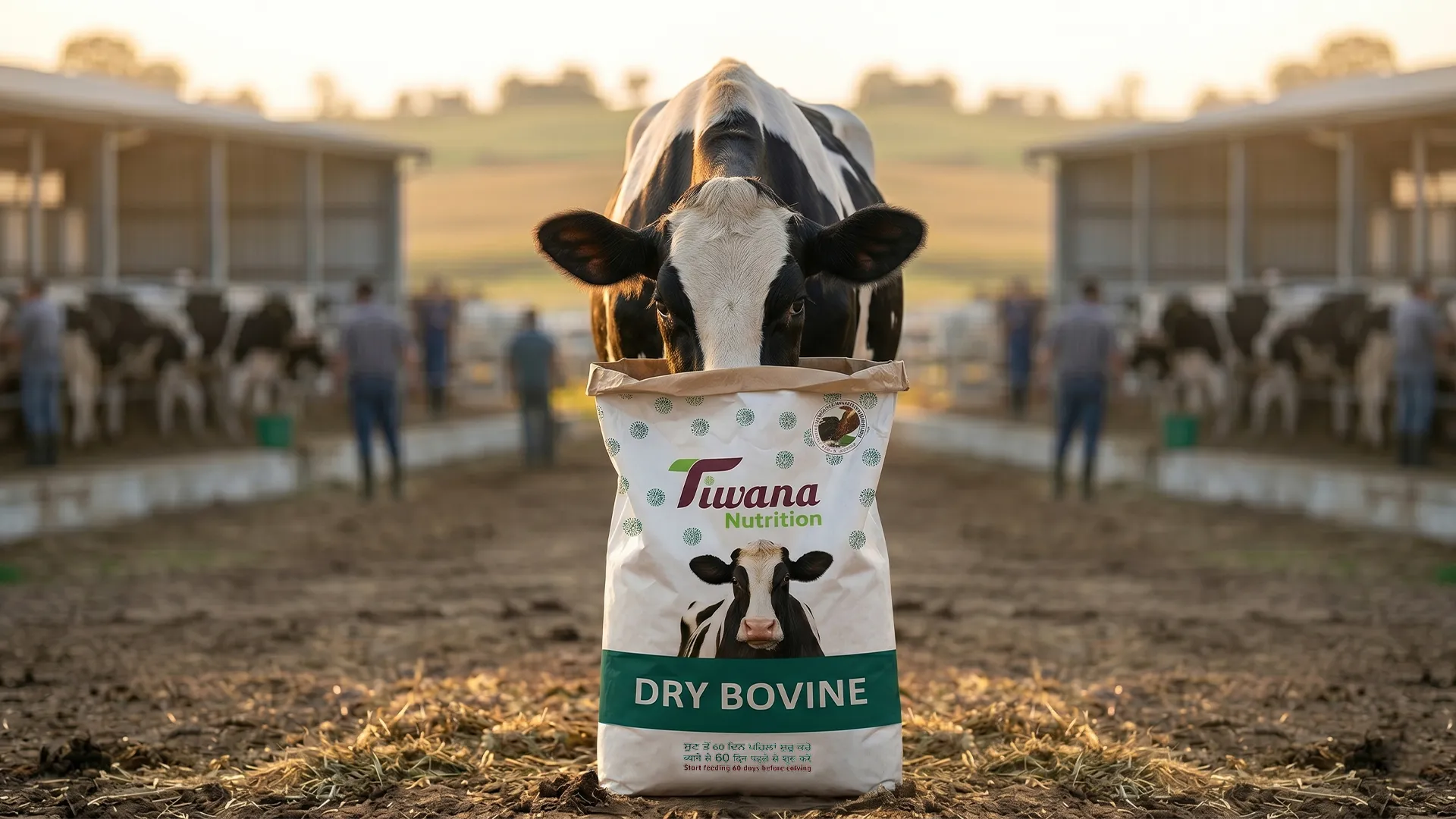
Modern dairy management is moving away from basic maintenance toward high-density nutrition during the dry phase. The dry Bovine formula is a specialized solution designed to bridge the gap between pregnancy and high-yield milking. Using this scientifically backed dry feed for cow management ensures livestock receive the exact nutrients required for internal recovery.
1. Superior 28% Protein Content
This high protein level provides the building blocks for rapid fetal growth and the repair of udder tissues. It prevents the animal from depleting her own muscle mass to support the calf during the final 60 days of pregnancy.
2. Targeted Rumen Support
The formula focuses on maintaining a healthy rumen wall so the animal can absorb nutrients efficiently right after calving. This prevents the digestive shocks that usually happen when a cow switches back to a heavy milking diet.
3. Optimized Mineral Balance
Specific vitamins and minerals are mixed into dry Bovine to stabilize the cow’s metabolism and stop post-birth health failures. These nutrients are essential for bone strength and help the cow move calcium effectively for milk production.
4. Scientific Precision
Every batch goes through strict lab testing to make sure the purity and density meet the standards of modern dairy units. This quality control ensures farmers get consistent results and a clear return on their investment in animal health.
How Should You Calculate the Daily Intake for Your Livestock?
Giving the correct amount of dry cow feed matters just as much as the quality of the ingredients. To get the best results with the dry Bovine formula, you must calculate intake based on the animal’s actual weight. Generic feeding amounts often lead to problems; either the cow lacks energy for the calf, or she gains too much fat, which causes difficult births.
The standard rule for this high-density formula is 330 grams for every 50 kilograms of Body Weight (BW). This is about 0.66% of the animal’s total weight. This specific ratio ensures the cow gets the exact nutrients needed for rumen recovery and calf growth during the vital 60-day dry period.
The table below serves as a quick reference guide to help you find the daily requirement for different animal sizes:
| Animal Body Weight (kg) | Daily Feed Requirement (kg) | Recommended Feeding Frequency |
|---|---|---|
| 350 kg | 2.31 kg | Split into 2 meals |
| 400 kg | 2.64 kg | Split into 2 meals |
| 450 kg | 2.97 kg | Split into 2 meals |
| 500 kg | 3.30 kg | Split into 2 meals |
| 550 kg | 3.63 kg | Split into 2 meals |
| 600 kg | 3.96 kg | Split into 2 meals |
What Are the Immediate Benefits of High-Protein Dry Feed?
A high-protein diet during the transition phase gives you results you can actually see in your herd. It isn’t just about the long term; it helps the cow stay strong during pregnancy instead of just surviving it. Moving to a 28% protein density during the 60-day dry window offers several clear advantages:
- Better Calf Birth Weight: High protein levels help the calf grow strong muscles and healthy organs before birth. This gives the newborn a much better start and lowers the chances of early health problems.
- Quick Rumen Reset: The specific fiber and protein mix in dry Bovine gets the cow’s stomach ready for the heavy feeding needed once milking starts.
- High-Quality Colostrum: Good nutrition creates “liquid gold.” This means the first milk is packed with the antibodies a calf needs to build its immune system.
- Faster Recovery After Birth: Cows that keep their protein levels up during the dry period get back to their full diet much faster after calving. This stops them from losing too much weight in the first few weeks.
- Higher Milk Protein Later: If you protect the cow’s amino acid levels now, you will see higher protein percentages in the milk she produces throughout the next season.
Invest in a Problem-Free Calving Season
Choosing a specialized nutritional path during the dry period is the most effective way to ensure long-term farm success. These sixty days represent a critical window for repairing the rumen and supporting rapid fetal development. By focusing on a high-quality dry cow feed, you eliminate the risk of metabolic failures and set the stage for peak milk production.
Tiwana Nutrition offers the specific 28% protein density your livestock needs to stay healthy during this transition. Our dry Bovine formula is built for professional farmers who want clean ingredients and real results. Secure your next milking cycle by switching to our feeding program today, and contact our team for a custom nutrition plan that fits your farm.