High Protein Cattle Feed with 35 Protein for Healthy Weight Gain
Starting the journey toward a high-yielding dairy farm begins long before a heifer enters the milking parlor. Many farmers face the challenge of slow growth in young stock, often discovering too late that standard fodder lacks the nutritional density required for rapid development. Integrating a high protein cattle feed into the daily diet is the most reliable way to fill this gap and ensure every animal reaches its full physical potential.
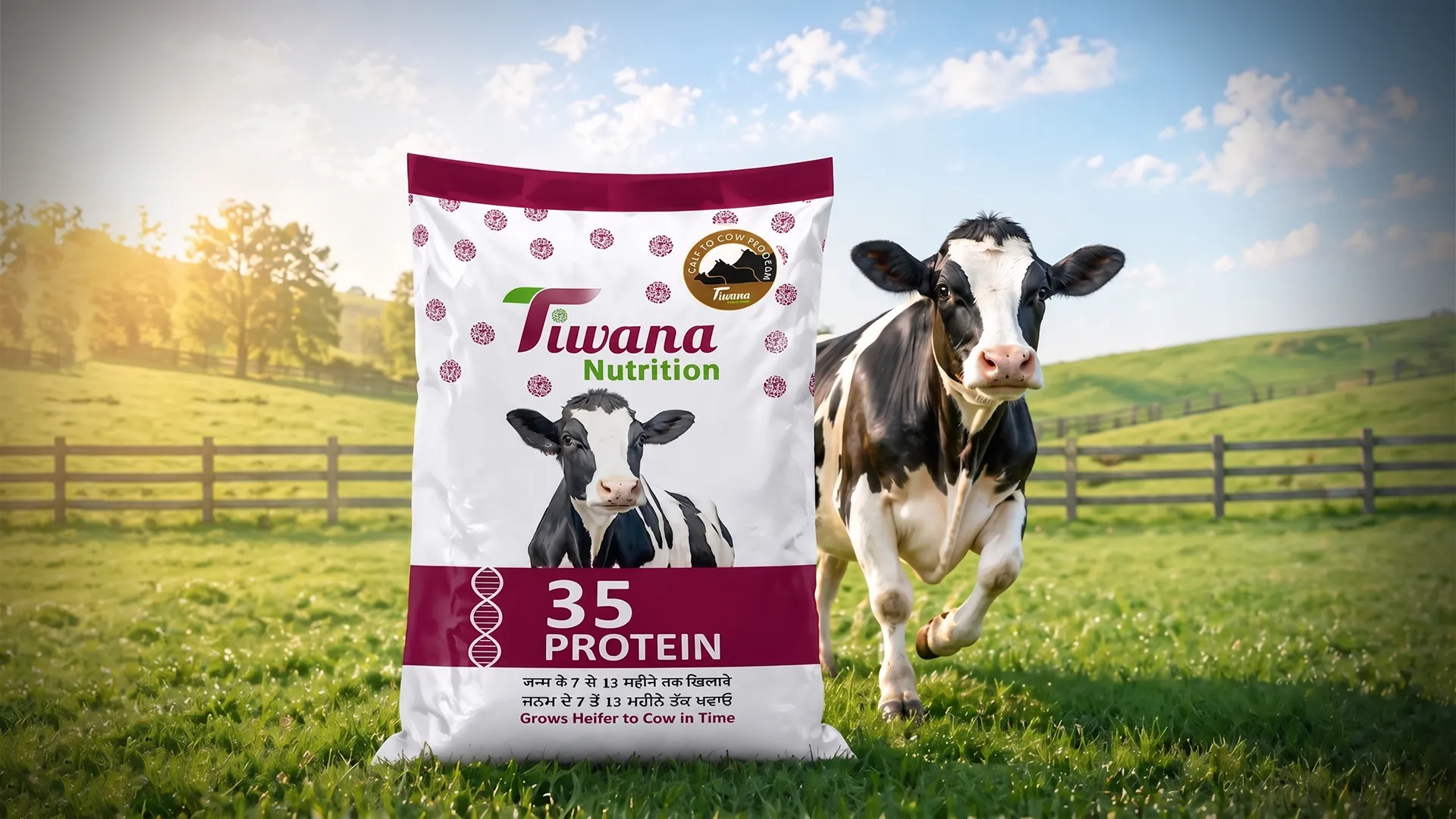
Building a productive herd requires moving away from general feeding toward precision nutrition during the critical adolescent phase. Using a specialized formula like the Tiwana 35 Protein feed allows for the controlled development needed to prepare young heifers for early breeding. This targeted approach to animal health ensures that every gram of nutrition contributes to building lean muscle and skeletal strength rather than unproductive fat.
Why is high protein cattle feed necessary for 7–13 month heifers?
The months between seven and thirteen are the most critical for a heifer’s physical development. During this time, the young animal matures into a reproductive adult and needs enough amino acids to build a solid skeletal frame. Without a steady supply of high protein cattle feed, a heifer might look fine on the outside but will lack the internal strength needed to carry and deliver a healthy calf.
Using a concentrated nutritional source like 35 Protein during this fast-growing stage gives a farmer several clear benefits:
- Skeletal Extension: Good protein helps the heifer grow taller and wider, which creates the necessary internal space for a developing calf later on.
- Immune Resilience: Better nutrition builds a tougher metabolic system, helping the animal fight off seasonal diseases that often stop growth.
- Rumen Development: Specialized feed helps the stomach mature quickly, so the animal can digest dry fodder and grass more effectively as it gets older.
How does 35 Protein support healthy weight gain in young livestock?
While many farmers associate weight gain with a heavy diet of grains and fats, true development in young heifers is about muscle density and bone strength. Using a feed like 35 Protein formula ensures that the animal gains weight without becoming “fatty,” which is a common mistake that can lead to reproductive failure. This high level of amino acids allows the body to prioritize the growth of vital organs and the mammary system.
To understand the difference between standard feeding and a specialized high-density diet, consider the following comparison of how various nutrients impact the animal’s body:
| Growth Factor | Traditional Low-Protein Feed | Tiwana 35 Protein Feed |
|---|---|---|
| Primary Result | Increased abdominal fat and “pot-belly” | Lean muscle development and height |
| Skeletal Frame | Slower bone mineralization | Rapid frame expansion for breeding |
| Daily Intake | Large volumes are required for basic needs | High-density nutrition in smaller portions |
| Digestibility | Often contains high fibre/fillers | Precision ingredients for maximum absorption |
What is the correct dosage of high protein cattle feed for daily growth?
Feeding the right amount ensures a young animal grows steadily without wasting money on extra feed. Unlike adult cows that can eat large amounts of roughage, a heifer between 7 and 13 months needs a more concentrated diet. Using a specialized 35 Protein formula allows a farmer to provide high nutrition in a smaller portion that fits a developing stomach.
1. The 200g Rule:
Feed exactly 200 g for every 25 kg of the heifer’s current body weight. This simple ratio ensures she gets enough nutrition to grow without overloading her developing stomach with too much volume.
2. Daily Maximum:
Keep the daily limit at 2.15 kg of this concentrate. Capping the intake this way keeps her metabolism healthy and prevents her from getting too fat, which often hurts future milk production.
3. Feeding Frequency:
Split the total daily amount into two separate feedings, ideally once in the morning and once in the evening. Regular feeding times help the heifer keep her energy steady and improve how well she digests the high protein cattle feed.
4. Water Access:
Always provide fresh, clean drinking water around the clock. Proper hydration is a must for kidney health and helps her body turn feed into lean muscle more efficiently.
Can you reach breeding readiness faster with Tiwana Nutrition 35 protein cattle feed?
A dairy farm’s success depends on how soon a heifer starts her first milking cycle. Traditional feeding often leads to slow growth, but a specialized 35 Protein formula ensures the animal hits the weight and height needed for safe breeding. Using precision nutrition from Tiwana Nutrition helps you build a stronger frame, supporting the long-term health and productivity of your entire herd.
- Earlier Maturity: Reaching the right body weight early allows for breeding to start between 13 and 15 months, which helps each cow earn more profit over her lifetime.
- Easier Calving: A frame built on a 35 Protein diet is wider and stronger, which reduces the risk of physical problems during the animal’s first birth.
- Better Milk Tissue: High-quality protein helps the heifer grow milk-producing tissue rather than internal fat that can lower future milk yields.
- Steady Heat Cycles: Balanced nutrition keeps the animal’s internal systems working correctly, leading to stronger and more predictable heat cycles that are easier for the farmer to manage.
Does using high protein cattle feed improve the Body Condition Score (BCS)?
Maintaining a proper Body Condition Score (BCS) is the most reliable way for a farmer to track the internal health of a growing heifer. Unlike simple weight, BCS measures the amount of muscle and fat covering the animal’s skeleton, which directly influences its ability to conceive and produce milk. By consistently using a high protein cattle feed, you can ensure the animal stays within the ideal score range of 3.0 to 3.25 during the breeding phase.
A balanced physical state prevents the animal from becoming too thin, which can delay heat cycles, or too fat, which causes calving difficulties.
- Muscle vs. Fat: A diet rich in 35 Protein builds the lean muscle mass necessary for a strong physical frame without creating the internal fat deposits that clog the mammary glands.
- Visual Indicators: A heifer with a healthy score will have a smooth coat and well-covered ribs, signalling that her metabolic system is functioning at its peak.
- Reproductive Efficiency: Animals that maintain a consistent BCS are much more likely to conceive on the first insemination, saving the farmer time and expensive semen costs.
- Post-Calving Recovery: Heifers that enter their first lactation with a strong body condition recover faster after birth, allowing them to reach peak milk production much sooner.
Build a Stronger Herd Today for a More Profitable Tomorrow
Investing in a 35 protein cattle feed is a strategic decision that shapes the long-term productivity of your dairy farm. By focusing on the specific nutritional needs of heifers between 7 and 13 months, you are ensuring they develop the skeletal strength and muscle density required for a successful career as a high-yielding cow. This precision-based approach to feeding eliminates the guesswork and helps you reach your growth targets with total confidence.
Tiwana Nutrition provides the scientific expertise needed to help your livestock achieve an ideal Body Condition Score and peak breeding readiness. Our specialized 35 Protein formula is designed to deliver maximum results in a controlled, efficient daily ration. Choose a nutrition partner that understands the science of animal growth and start building a more profitable, healthier herd for the future of your dairy business.