
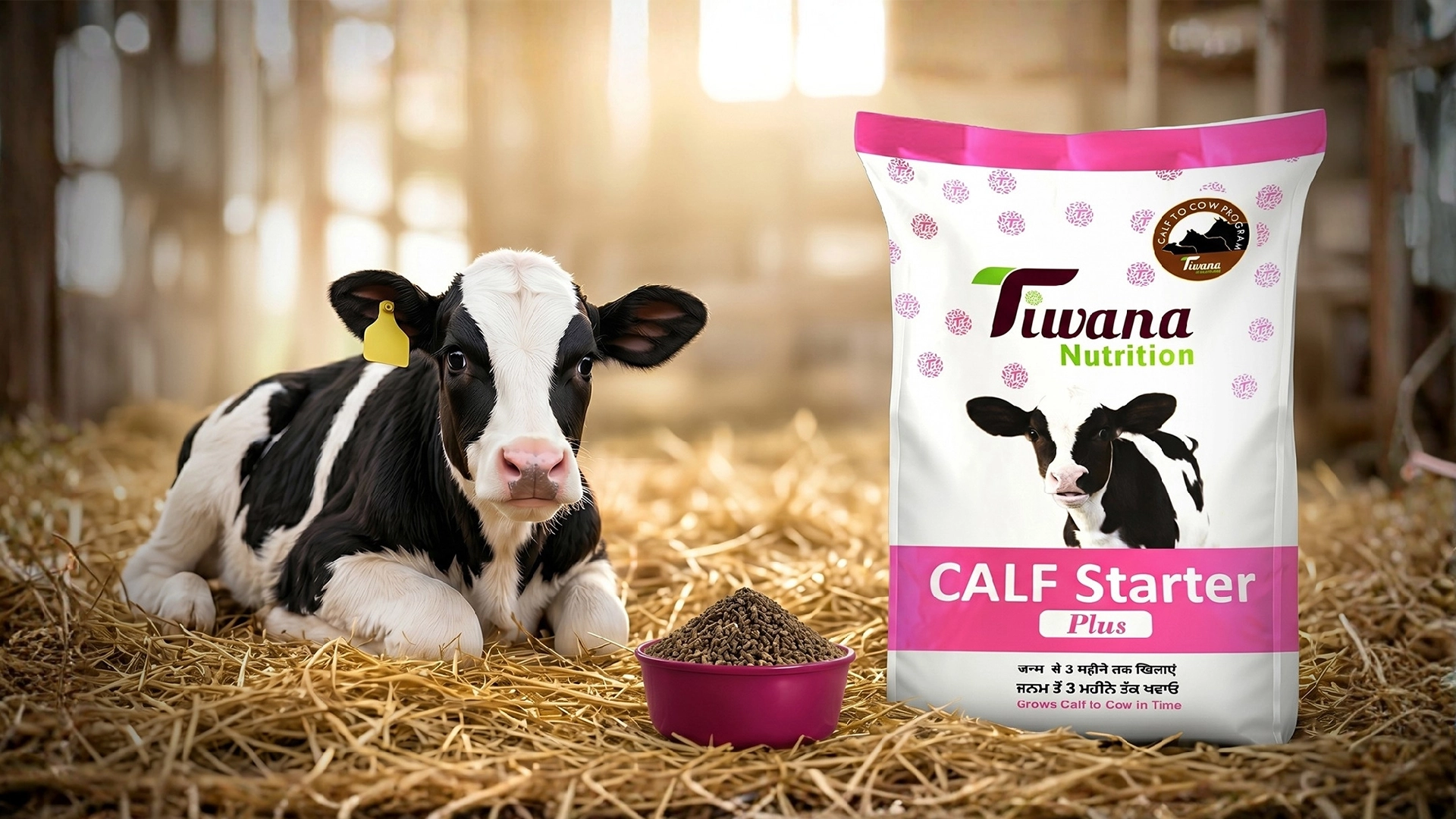
How to Use Calf Starter Plus for Strong and Healthy Calves
Every year, thousands of dairy calves in India fail to achieve their full productive potential—not due to disease, but because of inadequate nutrition during the most critical phase of early life.
The period from day 4 to day 90 is a decisive window in calf development. During this time, the rumen, immune system, and skeletal structure are rapidly forming. Nutrition provided in these early days does not just support growth—it defines the animal’s future productivity, including its milk yield potential.
This is exactly where Calf Starter Plus delivers measurable results. When introduced early, fed consistently, and adjusted according to the calf’s growth stage, it creates a strong biological foundation for long-term performance.
A common yet costly mistake among many Indian dairy farmers is relying solely on milk feeding during the initial weeks and delaying the introduction of solid feed until weaning. This approach slows down rumen development and delays the calf’s transition into an efficient ruminant.
In contrast, a scientifically formulated calf starter, when introduced as early as day 4 alongside milk, stimulates early rumen activity. This accelerates microbial development, improves feed efficiency, and prepares the calf for higher intake and better nutrient utilization later in life.
Calf Starter Plus is specifically designed to meet these early-life nutritional demands under Indian dairy conditions. It supports both buffalo calves and cattle calves, ensuring optimal growth, stronger immunity, and a smoother transition from milk to solid feeding.
Why the First 90 Days Decide a Calf’s Entire Future
A calf is born with four stomach compartments, but at birth, only the abomasum is fully functional. The rumen, which is responsible for digesting solid feed, remains small, inactive, and underdeveloped.
The transformation of this inactive rumen into a fully functional fermentation chamber is the most critical biological event in a calf’s early life. This process begins only when the calf starts consuming solid feed. From day 4 to day 90, the rumen develops structurally and functionally—laying the foundation for efficient digestion, strong immunity, and future productivity.
The quality and timing of nutrition during this phase directly determine:
- Rumen capacity and efficiency
- Immune system strength
- Skeletal growth and body development
- Lifetime milk production potential
Ignoring this window is not just a nutritional gap—it is a permanent loss in productivity that cannot be corrected later.
Key Consequences of Poor Early Nutrition
- Weak Rumen Development
Delayed introduction of solid feed restricts the growth of rumen papillae. As a result, the calf’s ability to digest and utilize nutrients remains poor, even after weaning, leading to inefficient growth and higher feed costs over time. - Low Disease Resistance
Inadequate early nutrition weakens the immune system. Such calves are more prone to diarrhoea, respiratory infections, and post-weaning stress, resulting in higher mortality risk and increased treatment expenses. - Poor Skeletal Growth
The first 90 days are critical for bone formation. A lack of balanced protein, energy, and essential minerals during this phase leads to stunted growth. These animals reach breeding age later and often remain underweight and structurally weak. - Reduced Lifetime Milk Yield
Calves that are poorly nourished early in life never fully recover their genetic production potential. Even with excellent feeding in later stages, the loss in milk yield remains permanent—directly affecting long-term farm profitability.
The Takeaway
Early nutrition is not an expense—it is a long-term investment. A scientifically managed feeding program during the first 90 days ensures that the calf develops into a high-performing, healthy, and productive dairy animal
When Should You Introduce Calf Starter Feed—and Why Waiting Is a Costly Mistake
A widespread misconception among dairy farmers is that solid feed should only be introduced after weaning. In reality, delaying calf starter feeding results in the loss of valuable time needed for early rumen development.
When Exactly Should Calf Starter Plus Be Introduced?
The introduction of Calf Starter Plus should begin from day 4 onward, earlier than what is commonly practiced on many farms.
- In the first few weeks, intake will be minimal—and that is completely normal.
- At this stage, the objective is not quantity, but early exposure and rumen stimulation.
- As the calf grows, starter intake increases naturally, supporting a gradual transition toward solid feed dependency.
To ensure optimal results, Calf Starter Plus follows a structured, week-by-week feeding schedule, designed to:
- Promote consistent rumen development
- Strengthen immunity
- Support steady and efficient growth
At this stage, milk continues to fulfill the calf’s immediate energy and nutrient requirements. Meanwhile, the calf starter plays a different and equally important role: it begins the process of rumen activation and development in the background.
Does Feeding Milk and Starter Together Lead to Overfeeding?
This is a common concern, but scientifically, the answer is no. Milk and calf starter follow entirely different digestive pathways:
- Milk digestion pathway
Milk bypasses the rumen through the oesophageal groove and goes directly to the abomasum, where it is digested efficiently. - Starter feed pathway
Calf starter enters the rumen, where it undergoes microbial fermentation. This process produces volatile fatty acids, particularly butyric acid, which stimulates the growth of rumen papillae—the structures responsible for nutrient absorption.
Because these two feeds function independently within the digestive system, feeding them together is not overfeeding—it is a precise and scientifically aligned nutritional strategy.
The Practical Insight
Early starter feeding is not about feeding more—it is about feeding right and at the right time. Farmers who adopt this approach see smoother weaning, healthier calves, and significantly better long-term performance.
Week-by-Week Feeding Schedule: How Much Is Enough at Each Stage?
Feeding Calf Starter Plus is not a matter of guesswork. Each stage of a calf’s early life requires a precise quantity of solid feed. Feeding too little slows rumen development, while overfeeding can lead to digestive stress and reduced intake efficiency.
A structured, progressive feeding approach ensures that the calf’s rumen develops in sync with its nutritional needs, leading to better growth, smoother weaning, and stronger lifetime performance.
| Age of Calf | Quantity (% of Body Weight) | Stage Focus |
|---|---|---|
| 4 – 28 Days | As much as a calf eats | Early rumen trigger alongside milk |
| 29 – 35 Days | 0.75 kg | Appetite-building phase |
| 36 – 42 Days | 1.50 kg | Rumen fermentation is actively increasing |
| 43 – 49 Days | 2.25 kg | Solid feed dependency growing |
| 50 – 56 Days | 2.75 kg | Pre-weaning transition phase |
| 57 – 90 Days | 3.25 kg | Full rumen function and immunity consolidation |
Two Critical Practices That Make This Schedule Work on Real Farms
Even the best feeding schedule delivers results only when supported by correct on-farm practices. The following two principles are essential for translating theory into consistent performance:
- Continuous Access to Clean Water
Fresh, clean drinking water must always be available alongside the starter feed. Water intake is not optional—it directly influences starter consumption, rumen fermentation, and overall feed efficiency. Without adequate water, rumen microbes cannot function optimally, limiting the full benefit of early starter feeding. - Gradual and Progressive Feed Increase
Starter quantity should never be increased or reduced abruptly between stages. A steady, progressive increase allows the rumen to adapt smoothly to higher feed intake. Sudden changes can disrupt digestion, reduce intake, and increase the risk of weaning stress and digestive disorders.
Your Calf’s First 90 Days Begin Here
The first 90 days of a calf’s life are not a passive phase—they represent the most critical nutritional window available to a dairy farmer. Every week of structured feeding during this period directly contributes to rumen development, immune strength, and long-term productivity.
When a scientifically designed feeding program is followed, the results are not theoretical—they become visible well before weaning. Improved starter intake, better growth rates, and healthier calves are clear indicators that the foundation is being built correctly.
Success during this phase depends on three key factors working together:
- Right dosage at the right stage
- High-quality, balanced nutrition
- Timely introduction of starter feed from day 4
When these are aligned, the calf transitions smoothly from a milk-dependent animal to a fully functional ruminant—ready for efficient growth and future milk production.
For Indian dairy farmers managing buffalo and crossbred calves, Tiwana Calf Starter Plus is formulated to match real farm conditions. It delivers:
- Stage-specific nutrition tailored for early-life development
- Support for immunity starting from day 4
- A structured feeding approach designed for consistent growth up to 90 days
If the goal is to raise stronger, healthier, and more productive animals, the foundation must begin early—and it must begin right.
Connect with your nearest Tiwana dealer or visit tiwana.in to learn more about Calf Starter Plus and start building your herd’s future today.
FAQs
Q1. At what age should I start feeding Calf Starter Plus to my calf?
Calf Starter Plus should be introduced from day 4 of the calf’s life, alongside milk, waiting until after weaning is too late.
Q2. Can I feed calf starter feed along with milk at the same time?
Yes. Milk goes directly to the abomasum while calf starter feed enters the rumen, so both can be fed together without any conflict.
Q3. How much calf starter should I feed a 2-month-old calf daily?
A calf between 57 and 90 days old needs 3.25 kg of calf starter per day, this quantity supports full rumen function at that stage.
Q4. Why does 23.5% protein in a calf starter feed matter?
Most standard feeds carry only 18–20% protein, which covers basic needs but falls short on muscle building, immunity, and rumen microbial support.
Q5. What is the difference between regular cattle feed and the best calf starter feed?
Regular cattle feed is made for a fully developed adult rumen and does not carry the protein levels or digestibility that a young calf’s body actually needs.