T-20 Dry Feed Benefits for Pregnant Cow and Dairy Buffalo
Most dairy farmers focus on what to feed their animals after calving, but very few pay attention to the critical 20 days before calving. This gap in management is where milk yields decline, calving complications increase, and herd profitability quietly suffers.
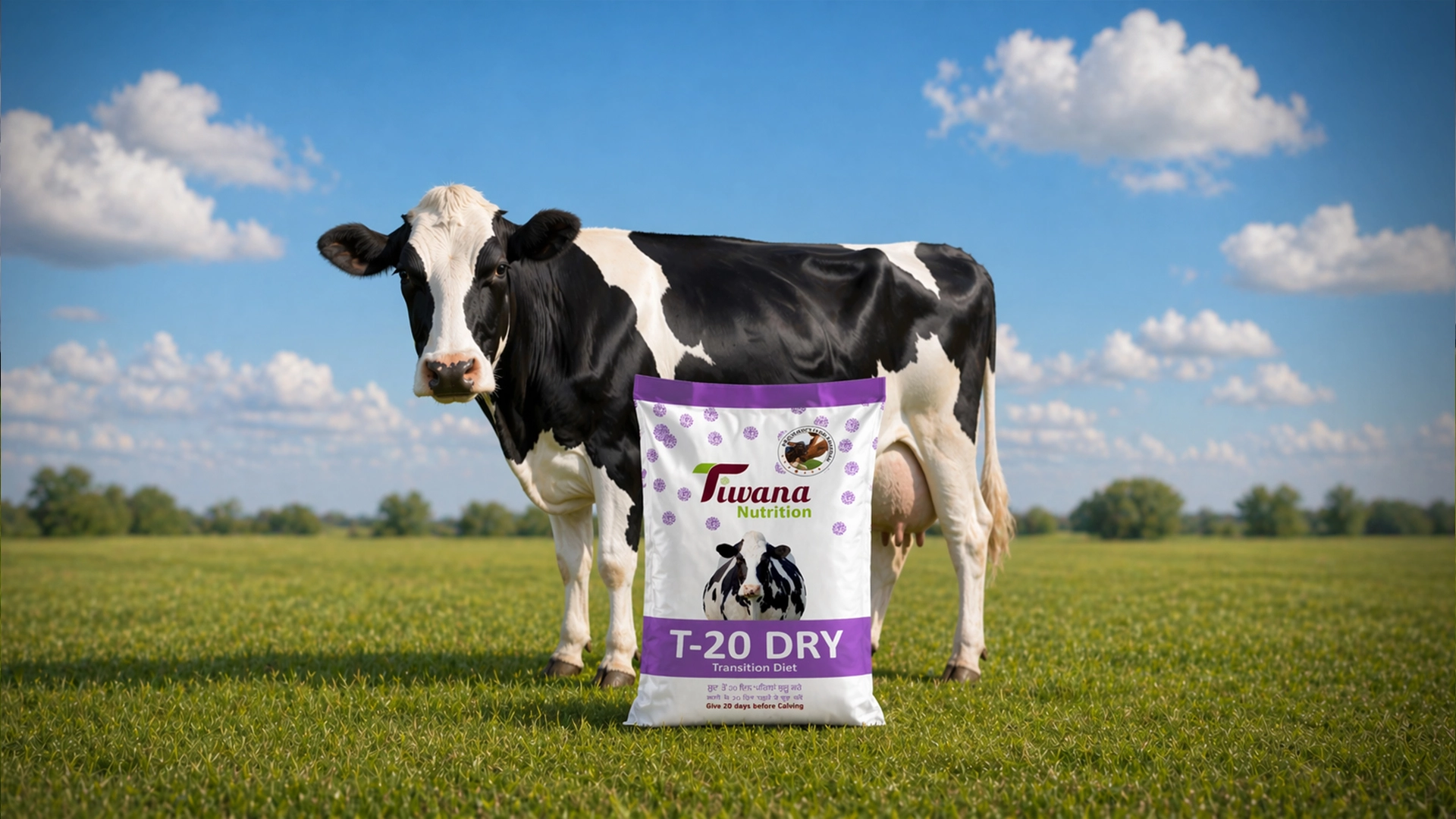
A scientifically formulated T-20 dry feed is designed specifically for this transition period—the most nutritionally demanding phase in a dairy animal’s productive life. Indian dairy farmers managing cows and buffaloes, selecting the right feed for pregnant animals during this stage is not a secondary decision; it is the decision that influences colostrum quality, calf health, udder development, and the strength of the upcoming lactation.
Stage-specific formulations are built on a simple principle: what you feed before calving determines what you gain after it.
Why Do the Last 20 Days Before Calving Matter More Than Any Other Stage?
In the final 20 days of pregnancy, a dairy animal’s body undergoes more simultaneous biological changes than at any other stage of its productive cycle. The fetus grows at its fastest rate, the mammary gland prepares for first milk production, and the immune system becomes naturally suppressed around calving. At the same time, dry matter intake begins to decline—precisely when the animal’s nutritional requirements are at their peak.
This period is known as the transition window. For feed designed for pregnant cows and buffaloes to be truly effective, it must be stage-specific—formulated not for general maintenance, but for the exact physiological demands the animal is preparing to meet.
- Fetal development accelerates rapidly in the final trimester
- Colostrum synthesis begins several weeks before calving
- Metabolic stress reaches its peak in the last 20 days—not after calving
Feeding a general concentrate during this phase is like preparing for a marathon on a walking diet. The body does not need more feed—it needs the right feed, with precision nutrition tailored to this critical stage.
What Happens Inside the Animal’s Body in the Pre-Calving Phase?
Understanding the physiological demands during the pre-calving phase clearly explains why standard feed is often inadequate. Multiple biological processes occur simultaneously, each requiring specific nutrients—and each carrying consequences if those needs are not met.
A well-designed, stage-specific T-20 dry feed is formulated to address these demands in a single, balanced ration.
| Body Process | What the Animal Needs | Risk If Unmet |
|---|---|---|
| Fetal growth surge | High crude protein (28%) | Low birth weight calf, weak start |
| Mammary gland preparation | Balanced minerals + energy | Poor colostrum quality, low first milk |
| Calcium homeostasis | Controlled mineral ratios | Milk fever post-calving |
| Immune function | Antioxidants + vitamins | Higher mastitis risk at calving |
| Rumen adaptation | Gradual concentrate introduction | Feed refusal, energy deficit post-calving |
In this phase, nutrition is not just about meeting requirements—it is about synchronizing the animal’s metabolism with the demands of calving and the upcoming lactation. A gap in even one area can reduce overall performance, even if other nutrients are adequately supplied.
How Does Protein Percentage Affect Calving Outcomes and Milk Production?
Most farmers plan their feeding strategy around lactation. What is less understood is that the protein supplied during the dry phase directly determines how strong that lactation begins. In reality, choosing the best feed for increasing milk production is a pre-calving decision—not a post-calving one.
A feed containing around 28% crude protein during this stage can significantly influence key performance outcomes:
- Stronger Calf at Birth: Adequate protein intake supports proper fetal muscle and organ development, resulting in a healthier calf with a stronger start.
- Reduced Risk of Ketosis: Proper protein and nitrogen balance support liver function and energy metabolism, helping protect the animal during the high-demand early lactation period.
- Improved Rumen Transition: Balanced protein nutrition promotes gradual rumen adaptation, reducing the chances of feed refusal and negative energy balance after calving.
- Higher Milk Production in Early Lactation: Animals receiving stage-appropriate protein before calving enter lactation with a well-developed and nutritionally prepared mammary system, leading to better milk output in the first weeks.
Can the Right Feed Before Calving Actually Prevent Mastitis?
Mastitis is often treated as a post-calving problem. In reality, its foundation is laid in the weeks before calving, when the animal’s immune system is at its weakest. This makes the pre-calving phase a critical window where the right feeding strategy for pregnant cows and buffaloes can have a measurable impact.
Why This Period Is Critical:
- Immune Suppression Peaks Before Calving: White blood cell activity naturally declines during the final 2–3 weeks of pregnancy, increasing the udder’s vulnerability to infections.
- Mineral Deficiency Increases Risk: Low levels of key nutrients such as selenium, vitamin E, and zinc weaken udder tissue integrity and reduce the animal’s ability to fight infections at a crucial time.
- Nutritional Gaps Lead to Higher Mastitis Incidence: Animals that enter calving in a nutritionally compromised state show significantly higher rates of clinical mastitis, especially during the first two weeks of lactation.
The takeaway is clear: mastitis prevention does not begin in the milking parlour—it begins in the feed bunk. A well-balanced, stage-specific pre-calving ration strengthens immune function, supports udder health, and reduces the likelihood of infection during early lactation.
What Is the Right Way to Feed T-20 Dry: Dosage, Timing, and Duration?
Knowing that pre-calving nutrition matters is only half the solution. The other half is feeding with precision. Vague guidelines lead to inconsistent results, which is why T-20 Dry is designed around a clear, body-weight-based feeding protocol that removes guesswork from the process.
| Parameter | Recommended Detail |
|---|---|
| When to Start | 20 days before expected calving |
| Crude Protein | 28% |
| Recommended Dose | 330 g per 50 kg body weight |
| Suitable For | Pregnant buffalo and dairy cows |
| Primary Outcomes | Smooth calving, mastitis prevention |
For example, a 400 kg buffalo should receive approximately 2.64 kg of feed per day—a precise, measurable quantity that matches her body’s actual nutritional demands during this critical phase.
Starting T-20 Dry at the right time and maintaining the correct dosage through calving is what transforms nutritional science into consistent, farm-level results.
How Tiwana Nutrition’s T-20 Dry Is Redefining Pre-Calving Care for Indian Dairy Farmers
Most cattle feed available in the Indian market is designed for general use. T-20 Dry is not. It is formulated exclusively for a specific 20-day window—one that carries greater nutritional significance than any other stage in a dairy animal’s life. This stage-specific precision is what sets it apart from generic concentrate feeds that offer broad nutrition but miss critical pre-calving requirements.
For farmers aiming to increase milk production while protecting animal health during calving, stage-specific nutrition is not an option—it is the standard that delivers results.
Tiwana Nutrition brings this standard to Indian dairy farming through:
- Research-Backed Formulation: Every ingredient in T-20 Dry is carefully balanced to meet the animal’s physiological demands during the final 20 days—not just general maintenance needs.
- Consistent Quality Control: All raw materials are lab-tested before use, ensuring every batch delivers a reliable and consistent nutritional profile.
- Pan-India Availability: A structured dealer network and efficient logistics system ensure uninterrupted supply, so feeding programs remain consistent during this critical stage.
- Farmer-First Pricing: Precision nutrition is made accessible, supporting both animal performance and farm profitability.
One Feed. Twenty Days. A Stronger Lactation.
The 20 days before calving carry more nutritional importance than most farmers realize. This is the phase that determines calving ease, colostrum quality, and the strength of the lactation that follows. Treating it as a passive waiting period is where many dairy operations silently lose productivity.
T-20 Dry is specifically formulated for this stage, delivering 28% crude protein along with a precise mineral balance to support the animal through the most demanding phase of her cycle. It is a feed designed to improve milk production—starting even before the first drop is produced.
Start at the right time. Feed at the right level. See the difference where it matters most.
FAQs
Q1. When should I start feeding T-20 dry to my pregnant cow or buffalo?
Start feeding T-20 dry exactly 20 days before the expected calving date for best results in calving ease and udder health.
Q2. What is the correct dosage of T-20 dry feed?
The recommended dose is 330 grams per 50 kg body weight daily, ensuring precise nutrition aligned to the animal’s actual pre-calving requirements.
Q3. Can pre-calving feed really help prevent mastitis in dairy animals?
Yes. Correct mineral nutrition before calving strengthens udder immunity during the natural immune suppression window, significantly reducing mastitis risk post-calving.
Q4. How does pregnant buffalo feed affect milk production after calving?
Stage-specific pregnant buffalo feed primes the mammary gland before calving, directly supporting stronger first-week milk output and better overall lactation performance.
Q5. Is T-20 dry suitable for both cows and buffaloes?
Yes. T-20 dry is formulated to meet the pre-calving nutritional needs of both dairy cows and pregnant buffaloes across all breeds.